
 Quercus, Portugal’s National Association for Nature Conservation, has criticised the Government’s decision to build a waste incinerator in the Algarve, describing it as an “anachronistic and inappropriate” solution to the region’s seasonal peaks in waste production.
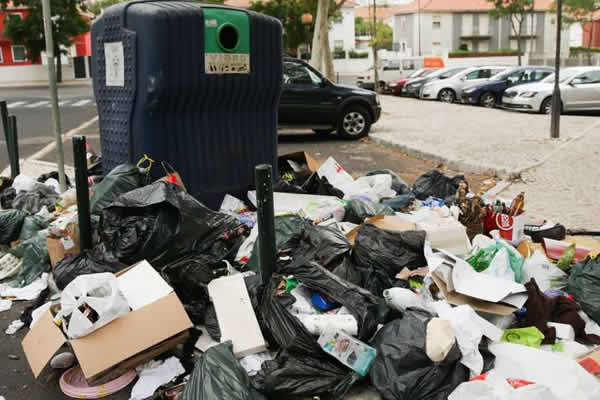
The proposed facility comes as the Algarve faces a growing waste-management problem, with the region’s two landfill sites approaching the limits of their capacity.
According to Quercus, the Algarve now produces around 400,000 tonnes of waste a year, the highest amount per inhabitant of any Portuguese region. Some 85% is currently sent to landfill, with the existing sites at risk of reaching capacity as early as 2027.
The environmental association argues that the Algarve’s waste problem is closely linked to its highly seasonal economy. During the peak tourist season, the region’s population increases dramatically, placing additional pressure on waste collection and treatment infrastructure that has to cope with large fluctuations in demand.
The Government’s proposal for an incinerator is intended to address this looming capacity problem by providing an alternative means of dealing with residual waste that cannot be recycled or otherwise recovered.
Quercus, however, argues that the proposed incinerator is a “completely anachronistic and unsuitable” response to the impending exhaustion of the region’s two landfill sites. It says the proposal is also “completely out of step” with the targets set out in PERSU (Portugal’s Strategic Plan for Municipal Waste) 2030, and with the climate objectives to which Portugal has committed.
Quercus says this seasonal factor should be taken into account when planning waste reduction and recycling targets, with tourists incorporated into calculations of the region’s waste generation.
The association also opposes incineration on environmental grounds, arguing that burning waste “produces more polluting gases than fossil fuels” and represents a “solution contrary to the principles of a circular economy”.
The non-profit describes the proposed facility as an “end-of-pipe” infrastructure that would simply replace landfill with another form of final waste disposal.
Instead, Quercus is calling for a series of alternative measures, including adjusting the Algarve’s waste reduction and recycling targets to reflect seasonal fluctuations in waste generation; better assessing the proportion of waste that cannot be recycled; and increasing the capacity and efficiency of existing mechanical and biological treatment (MBT) facilities.
The association is also calling for highly efficient door-to-door separate collection procedures, systems to identify users of waste containers, and the introduction of a “Pay As You Throw” charging system, whereby households and businesses would pay according to the amount of residual waste they produce.
Other proposals include installing Volta system collection points near beach facilities and investing in municipal community and household composting schemes.
Quercus argues that the Algarve’s current dependence on landfill is the result of decades of insufficient investment in more sustainable waste-management systems.
Source: LUSA / Quercus
Photo credit: Tiago Petinga


